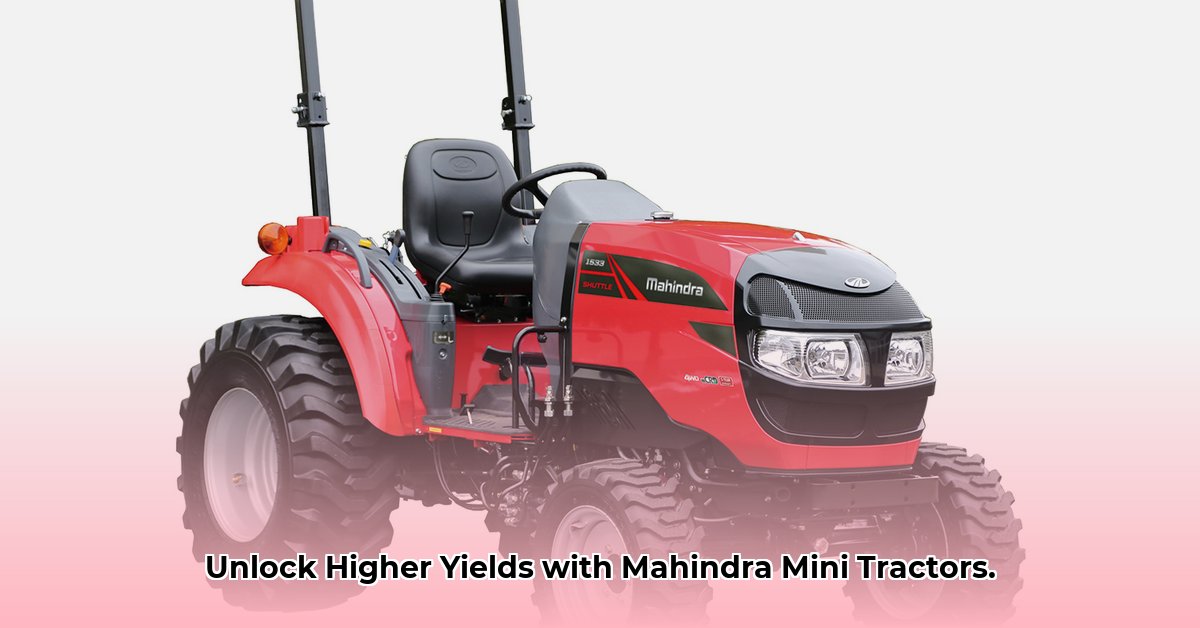
Mahindra mini tractors are increasingly prevalent in agricultural landscapes worldwide. But do these machines truly deliver on the promise of sustainable farming? This article delves beyond marketing materials to provide a comprehensive assessment, considering not only the tractors themselves but also their integration into broader, environmentally conscious, and economically viable farming systems. To learn more about Mahindra's manufacturing, check out this helpful resource: Mahindra Tractor Origins.
Mahindra's Mini Tractor Lineup: A Size for Every Operation
Mahindra offers a diverse range of mini tractors, catering to various farm sizes and operational needs. This versatility is a significant advantage. Small farms benefit from agile machines that maneuver easily and minimize soil compaction, while larger operations can leverage models with increased horsepower. Mahindra's comprehensive catalog aims to provide a suitable machine for diverse sustainable farming practices, emphasizing the crucial link between tractor capabilities and individual farm requirements. The key is finding the perfect fit.
Fuel Efficiency and Environmental Impact: A Critical Examination
Fuel efficiency is paramount in sustainable agriculture. While Mahindra markets its tractors as environmentally friendly, a more rigorous, independent analysis is necessary to quantify their actual environmental impact. Detailed fuel consumption figures, complete emissions data, and comprehensive life-cycle assessments are needed for a truly informed evaluation. Comparing Mahindra's performance against competitors allows farmers to make fully informed purchasing decisions. Transparency is crucial; farmers deserve a complete understanding before investing in equipment that will significantly impact their operations for years to come. "How can farmers ensure they are choosing the most environmentally conscious option?"
Mahindra Mini Tractors: Real-World Performance and Reliability
Practicality matters. Reliability is essential for any farmer; downtime equates to lost productivity and revenue. Therefore, evaluating the long-term reliability of Mahindra mini tractors is crucial. Are repairs straightforward? Is parts accessibility readily available? These questions are pivotal for prospective buyers. Understanding maintenance needs and parts availability adds a critical layer to the decision-making process. A tractor represents a substantial investment, and its long-term performance directly affects the farm's overall success. "What are the key maintenance considerations for maximizing the lifespan of a Mahindra mini tractor?"
Beyond the Machine: A Holistic Approach to Sustainable Farming
Sustainable farming transcends individual equipment. It demands a holistic strategy. Smart farming techniques, such as GPS-guided planting and precision spraying, significantly reduce resource consumption. Coupled with fuel-efficient machinery, these practices create a synergistic system that optimizes efficiency and minimizes waste. It's a collaborative approach – technology working in harmony with nature to achieve optimal yields while reducing environmental impact. "How can innovative farming practices complement the efficiency of Mahindra mini tractors?"
Mahindra's Future: Innovation and Sustainable Agriculture
Mahindra's future trajectory hinges on continuous research and development. Investing in even more fuel-efficient models, exploring hybrid or electric options, is vital for enhancing sustainability. Government policies and incentives can significantly accelerate the adoption of advanced technologies and encourage manufacturers like Mahindra to further innovate. The transition to truly sustainable agriculture is not a quick process; it's a long-term undertaking. Consistent innovation and technological advancements are essential for achieving this goal. "What role can government incentives play in promoting the adoption of sustainable agricultural technologies like Mahindra's mini tractors?"
Actionable Steps: A Roadmap for Sustainable Farming
Sustainable farming is a collective effort, requiring action from multiple stakeholders.
1. For Farmers:
- Short-Term: Conduct thorough research comparing mini tractor models, focusing on features, costs, and reliability.
- Long-Term: Adopt precision farming techniques to optimize resource use and minimize waste.
2. For Mahindra and Dealers:
- Short-Term: Publicly release comprehensive fuel efficiency and emissions data for all models.
- Long-Term: Invest in and launch low-emission or alternative-fuel mini tractor models.
3. For Government Agencies:
- Short-Term: Offer financial incentives and tax breaks for purchasing fuel-efficient equipment.
- Long-Term: Fund research and educational programs promoting sustainable agricultural practices.
4. For Sustainability NGOs:
- Short-Term: Advocate for standardized reporting of tractor emissions and fuel consumption data.
- Long-Term: Develop and disseminate best practices for sustainable farming, encompassing equipment selection.
Sustainable farming is a continuous journey of improvement. Selecting the right equipment is a significant step, but it's part of a larger strategy involving responsible farming methods, efficient resource management, and a commitment to minimizing environmental impact. The Mahindra mini tractor represents a single piece in this intricate puzzle. "What are the key metrics farmers should prioritize when comparing the sustainability of different mini tractor models?"